Views: 0 Author: Site Editor Publish Time: 2026-09-24 Origin: Site
Formulating stable, high-performance chemical products hinges on selecting the correct surfactant charge profile. You must understand these profiles whether you develop heavy-duty industrial degreasers or delicate cosmetic conditioners. Selecting the wrong surfactant class leads to catastrophic formulation failures on the production floor. These failures include rapid phase separation, neutralized active ingredients, and complete preservative deactivation. You might also encounter excessive skin irritation complaints or poor cleaning performance in hard water environments. Evaluating a cationic vs nonionic surfactant requires analyzing distinct chemical behaviors under varying thermal and pH conditions. You must evaluate strict formulation compatibility and specific end-use applications before scaling up production. This guide breaks down the technical evaluation criteria to determine the optimal surfactant class for your product line, ensuring stability from the mixing tank to the final end-user application.
Charge Dynamics Dictate Function: Cationic surfactants carry a positive charge, making them ideal for surface conditioning, modifying zeta potential, and antimicrobial applications. Nonionic surfactants carry no charge, offering superior emulsification, grease removal, and broad compatibility.
Formulation Compatibility: Nonionic surfactants are universally compatible with other surfactant classes. Cationic surfactants are strictly incompatible with anionic surfactants, requiring careful formulation to avoid coacervation and precipitation.
Thermodynamic and Emulsification Metrics: Nonionic surfactant performance is heavily dictated by their Hydrophilic-Lipophilic Balance (HLB) and Cloud Point, whereas cationic performance relies on substantivity and charge density.
Environmental and Safety Profiles: Nonionic options generally present lower skin irritation and better biodegradability profiles compared to cationics, though ethoxylated nonionics face emerging scrutiny regarding 1,4-Dioxane. Cationic Surfactants often face stricter regulatory scrutiny regarding aquatic toxicity.
Synergistic Potential: Blending nonionic surfactants with cationic agents is a standard industry practice to achieve stable, multi-functional products that clean and condition simultaneously.
Table of Contents
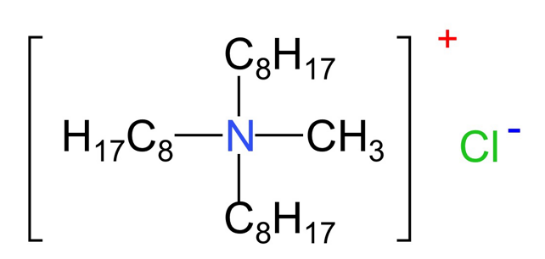
Cationic surfactants carry a positive charge that allows them to attach to negatively charged surfaces such as hair, skin, fabrics, and metals. This binding effect provides conditioning, antistatic, and protective properties. Common types include quaternary ammonium compounds, esterquats, and cetrimonium chloride, which are selected based on application needs and regulatory requirements.
Nonionic surfactants have no electrical charge and rely on hydrogen bonding for water solubility. Their neutral structure allows them to remain stable in hard water, extreme pH conditions, and various formulations. Common examples include alcohol ethoxylates, polysorbates, fatty acid alkanolamides, and APGs, which are widely used for cleaning, emulsification, solubilization, and sustainable formulations.
To understand the structural differences, review this comparison:
Feature | Cationic Surfactants | Nonionic Surfactants |
|---|---|---|
Hydrophilic Head Charge | Positive (+) | Neutral (0) |
Water Solubility Mechanism | Ionization | Hydrogen Bonding |
Primary Function | Conditioning, Antimicrobial | Emulsification, Detergency |
Surface Interaction | Binds to negative substrates | Lifts soils from substrates |
Electrolyte Tolerance | Poor to Moderate | Excellent |
Formulators use the Hydrophilic-Lipophilic Balance (HLB) system to select uncharged emulsifiers. The HLB scale typically ranges from 0 to 20. A low HLB value indicates a lipophilic molecule. You use low HLB options to create water-in-oil emulsions. A high HLB value indicates a hydrophilic molecule. You use high HLB options to create oil-in-water emulsions. This mathematical model allows precise predictive blending. You can match the required HLB of your oil phase perfectly, reducing trial and error in the lab.
Here is a standard HLB application guide:
HLB 4-6: Water-in-oil emulsifiers for heavy creams and industrial lubricants.
HLB 7-9: Wetting and spreading agents for agricultural adjuvants.
HLB 8-18: Oil-in-water emulsifiers for lotions and cutting fluids.
HLB 13-15: Detergents and heavy-duty cleaners for floor care.
HLB 15-18: Solubilizers for fragrances and essential oils in clear toners.
Positively charged molecules behave differently. Cationic Surfactants can technically act as emulsifiers. However, formulators rarely choose them solely for this purpose. They lack a standardized predictive model like the HLB system. They also carry higher procurement costs and increased irritation potential. You typically only use them as primary emulsifiers when you specifically need their antimicrobial or conditioning properties in the final emulsion, such as in a medicated skin cream or a specialized asphalt emulsion.
Nonionic surfactants may lose solubility when exposed to high temperatures, causing cloudiness and phase separation. Formulators should select surfactants with a cloud point higher than the product's operating temperature to maintain stability. Cationic surfactants do not rely on hydrogen bonding and generally provide better thermal stability in high-temperature applications.
Nonionic surfactants provide strong cleaning performance, especially for oils, grease, and oily soils. Their low critical micelle concentration allows efficient soil removal and prevents redeposition. Cationic surfactants are mainly used for conditioning and antimicrobial functions rather than primary cleaning because they tend to attach to surfaces instead of removing dirt.
Foaming behavior differs between surfactant types. Cationic surfactants can create stable foam, while nonionic surfactants usually produce low foam and rinse easily. Low-foaming nonionic surfactants are preferred for industrial cleaning, CIP systems, and automatic washing equipment where excessive foam can affect operation.
Nonionic surfactants perform well in hard water because they do not react with calcium and magnesium ions. They also remain stable across a wide pH range, making them suitable for various cleaning applications. Cationic surfactants have different stability levels depending on their structure, with quaternary ammonium compounds offering better stability across acidic and alkaline conditions.
Surfactant Type | Hard Water Tolerance | pH Stability Range |
|---|---|---|
Alcohol Ethoxylates | Excellent | pH 2 to 12 |
Alkyl Amines | Moderate | Acidic to Neutral (Loses charge > pH 8) |
Quaternary Ammonium | Good | pH 2 to 12 (Permanent charge) |
Alkyl Polyglucosides (APG) | Excellent | pH 3 to 13 |
Personal care products use cationic and nonionic surfactants for different functions. Cationic surfactants provide conditioning and anti-static effects by binding to hair and fabric surfaces. Nonionic surfactants offer gentle cleansing and solubilization, helping stabilize products such as facial cleansers, creams, and water-based formulas.
Cleaning products rely on different surfactant properties to achieve specific results. Cationic surfactants are widely used in disinfectants because of their antimicrobial activity, while nonionic surfactants provide strong cleaning and degreasing performance in laundry detergents, industrial cleaners, and hard surface applications.
Surfactants support various industrial and agricultural processes. Cationic surfactants are used in applications such as corrosion protection, asphalt processing, and mineral flotation. Nonionic surfactants are commonly used as pesticide adjuvants and cleaning agents because they improve wetting, spreading, and surface treatment performance.
Cationic and anionic surfactants have opposite charges and can react to form insoluble complexes. This may cause precipitation, formula separation, loss of foam performance, and reduced antimicrobial activity. To avoid these issues, manufacturers should separate incompatible systems, clean equipment carefully, and complete compatibility testing before production.
Some nonionic surfactants can form micelles that trap certain preservatives, reducing their ability to protect the product from microbial growth. Cationic surfactants may provide additional antimicrobial effects and support preservation systems. Proper compatibility testing helps ensure stable formulas and effective preservation.
Nonionic surfactants can work as compatibility enhancers in complex formulas. They provide cleaning performance while allowing other functional ingredients to work effectively. This makes them useful in multi-function products, such as cleaner-disinfectants and conditioning shampoos, where both cleansing and surface protection are required.
Nonionic surfactants are widely available and benefit from large-scale production, making them cost-effective for high-volume applications. Cationic surfactants usually require more complex manufacturing processes, resulting in higher costs. Raw material sources also affect supply stability. Petrochemical sources offer consistent supply, while plant-based materials support sustainability goals but may experience price fluctuations.
Surfactant safety depends on the chemical structure and application. Nonionic surfactants are generally mild and suitable for sensitive skin products, while cationic surfactants require stricter handling because high concentrations may cause irritation. Proper safety controls and protective measures are necessary during production.
Surfactant selection must consider environmental regulations and sustainability requirements. Cationic surfactants may face concerns related to aquatic toxicity, while ethoxylated nonionic surfactants require control of 1,4-Dioxane residues. Manufacturers should choose compliant raw materials, evaluate formulation compatibility, and use sustainable alternatives when developing new products.
A: Yes. They are highly compatible in aqueous solutions. Uncharged molecules do not interfere with the positive charge. Formulators frequently blend them to create stable 2-in-1 products. The uncharged molecule provides the primary cleaning and degreasing power, while the charged molecule delivers targeted conditioning or antimicrobial benefits to the substrate.
A: They lack an electrical charge. Hard water contains high levels of positively charged calcium and magnesium ions. These ions bind to and deactivate charged surfactants, forming insoluble soap scum. Uncharged molecules ignore these minerals entirely, maintaining their full cleaning efficacy without requiring expensive chelating agents.
A: Ethoxylated molecules rely on hydrogen bonding with water for solubility. Heating the solution increases kinetic energy, which eventually breaks these hydrogen bonds. The surfactant becomes insoluble, causing the clear formula to turn cloudy and separate into distinct phases. You must formulate below this specific temperature threshold.
A: Safety depends heavily on the final formulation concentration. At high concentrations in the mixing tank, they can be cytotoxic and highly irritating to skin and eyes. At low, carefully formulated concentrations found in hair conditioners or fabric softeners, they are safe and provide excellent smoothing benefits.
A: Mechanical washing requires high agitation. High agitation typically generates massive foam with charged surfactants. Uncharged molecules naturally exhibit low-foaming characteristics. They clean heavy greases effectively without generating foam that could damage pumps, block spray nozzles, or overflow the washing equipment.
A: Bacterial cell walls carry a net negative charge. The positively charged surfactant binds strongly to the cell wall through electrostatic attraction. The lipophilic tail of the surfactant then pierces and disrupts the lipid membrane of the bacteria. This structural disruption causes rapid cell death and prevents reproduction.