
Views: 0 Author: Site Editor Publish Time: 2026-02-06 Origin: Site
Static electricity shows up everywhere, from clinging fabrics to dusty plastic parts, and it quietly slows production while lowering product quality.
In this article, we explore how Surfactants work as antistatic agents, why different industries rely on them, and what you should know when applying them in textiles, plastics, electronics, and everyday products.
Static electricity begins when two surfaces touch and separate. During this moment, electrons shift from one material to another. Friction makes the transfer stronger, especially on dry days. Over time, charges stay on the surface and wait for a release path. This is why Surfactants matter—they help control how charges move.
In real production and daily use, wool, nylon, polyester, and plastics respond differently. Some lose electrons easily. Others trap them. That imbalance explains clinging clothes, dusty films, and charged molded parts right after processing.
Typical triggers you see on factory floors:
● Repeated contact: rollers, guides, molds. Each cycle adds charge, and Surfactants help break this loop by creating a slightly conductive surface layer that lets charges leak away slowly.
● Low humidity: dry air removes natural moisture. Surfactants attract trace water back to the surface, restoring conductivity even when the room feels dry.
● Hydrophobic substrates: plastics resist water. Surfactants anchor to them and expose hydrophilic groups outward, changing how the surface interacts with air.
Here is a simplified view of how common materials tend to behave:
Material | Charge Tendency | Common Use | Static Risk |
Wool / Nylon | More positive | Clothing, carpets | Medium |
Polyester | More negative | Fabrics, films | High |
Polyethylene / PVC | Strongly negative | Bags, containers | High |
Cotton / Viscose | Near neutral | Apparel, wipes | Low–Medium |
Static does more than annoy operators. It affects quality, safety, and efficiency. Charged surfaces pull in dust, parts stick together, and automated lines slow down. In sensitive environments, even small discharges can damage components.
● Dust attraction: particles cling to plastics and fabrics, lowering appearance quality. Surfactants reduce surface charge so debris stops returning after cleaning.
● Handling issues: sheets stick, fibers fly, parts misalign. Antistatic Surfactants smooth movement and reduce jams.
● Equipment and safety risks: invisible discharges shorten equipment life and increase fire risk in certain processes.
When Surfactants contact fibers or plastics, they reorganize the surface at a molecular level. Their hydrophobic chains attach to the substrate, while hydrophilic groups turn outward. This creates an oriented polar layer that changes how the material interacts with air and moisture. Instead of trapping charge, the surface becomes cooperative. It starts guiding electrons away.
What typically happens during adsorption:
● Hydrophobic anchoring: the tail grips plastics or fibers firmly. This keeps Surfactants active through repeated friction cycles and processing steps. Over time, they continue working instead of washing away easily.
● Hydrophilic exposure: the head faces outward and attracts moisture. That small change raises surface polarity and prepares a path for charge release.
● Reduced friction: the oriented layer also smooths contact between materials. They slide more easily, which lowers new static generation at the same time.
Once moisture settles on the surface, conductivity rises and resistance drops. Electrons stop building up in one place. They spread across the thin water film and escape into the air. This replaces sudden discharge with slow, controlled dissipation. It protects products, operators, and equipment.
The process usually follows three connected steps:
● Moisture-film formation: hydrophilic groups hold water in a continuous layer. This links charged regions and prevents isolated hotspots. Over repeated handling, this film keeps working as long as Surfactants remain on the surface.
● Lower surface resistance: dry plastics and fibers resist charge flow. After treatment, the same surfaces become mildly conductive. Charges weaken instead of concentrating.
● Ion-assisted transport: in ionic Surfactants, mobile ions help carry electrons along the surface. They speed up dissipation, especially under low-humidity conditions.
A simple production-side comparison:
Surface Condition | Surface Resistance | Charge Behavior | Dust Attraction |
Untreated material | High | Builds quickly | Strong |
Surfactant-treated | Lower | Dissipates gradually | Reduced |
There are two common approaches to static control. Physical methods adjust the environment. Chemical methods modify the surface. Humidity control and corona discharge belong to the first group. They work, but results depend heavily on room conditions and equipment tuning. Once air dries again, static often comes back.
Surface chemical methods rely on Surfactants. They change the material itself. That makes performance more stable and easier to scale across production lines.
From an operational viewpoint:
● Physical control depends on external factors. If humidity drops or airflow changes, static returns. It also requires added equipment and constant monitoring.
● Surfactant-based control stays with the product. You can coat surfaces or blend Surfactants directly into fibers and plastics. They keep working through transport, storage, and use.
● Process integration becomes simpler. Teams apply Surfactants during normal manufacturing steps, instead of adding separate antistatic stations.
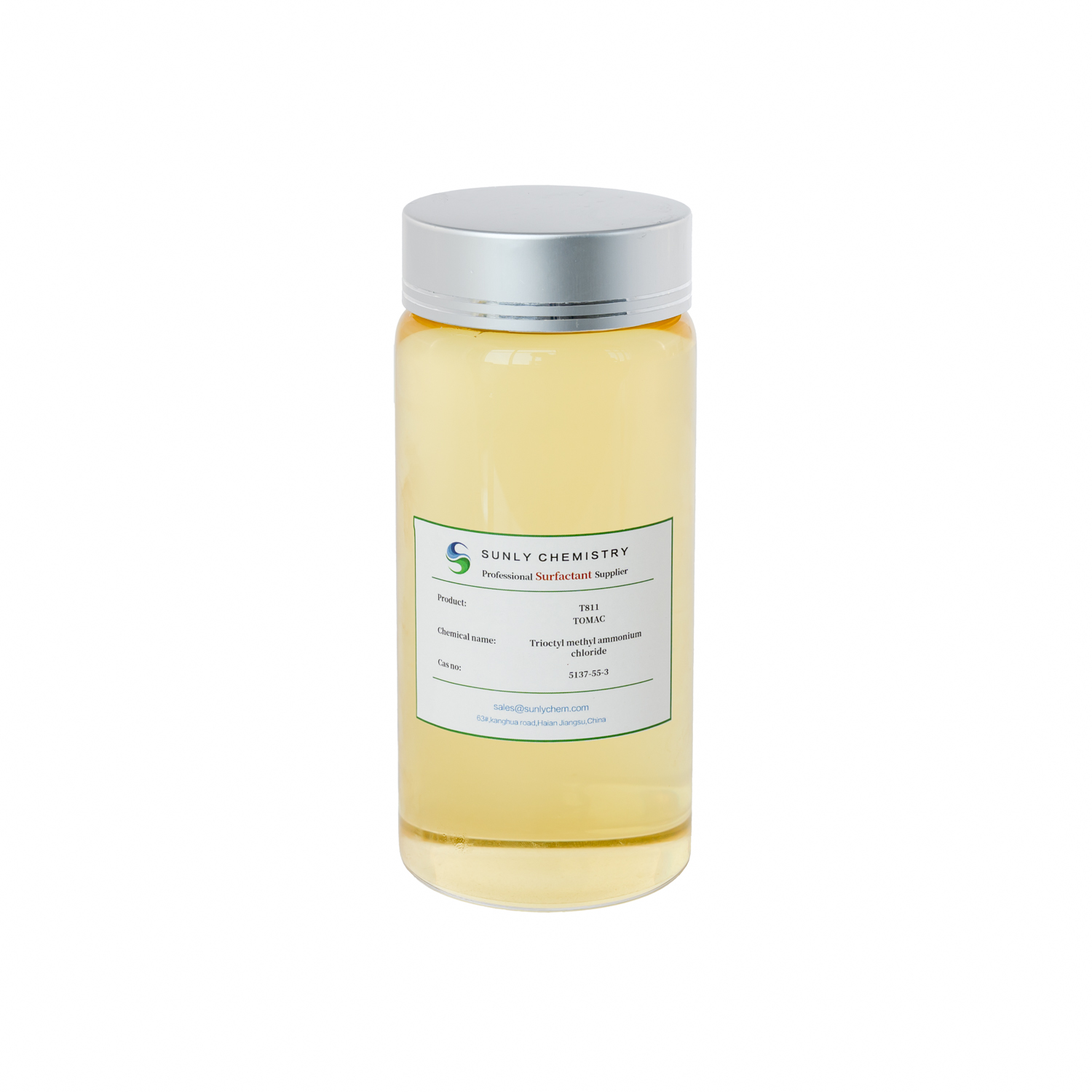
Cationic Surfactants carry a positive charge, so they naturally move toward negatively charged fibers and plastics. Once they reach the surface, they adsorb tightly and form a thin protective film. This film lowers friction, reduces new charge generation, and helps neutralize existing static. In real production, this makes fabrics feel smoother and plastic parts easier to handle.
What manufacturers value most about cationic Surfactants:
● Fast surface bonding. They attach quickly during finishing or compounding, so antistatic effects appear early in the process. Over repeated handling, they stay active instead of wearing off right away.
● Friction reduction. The oriented film acts like lubrication. Fibers slide more easily, parts release from molds faster, and static generation drops at the same time.
● Reliable charge neutralization. Positive ions balance negative surface charges, which helps prevent sudden discharge and dust attraction during storage or transport.
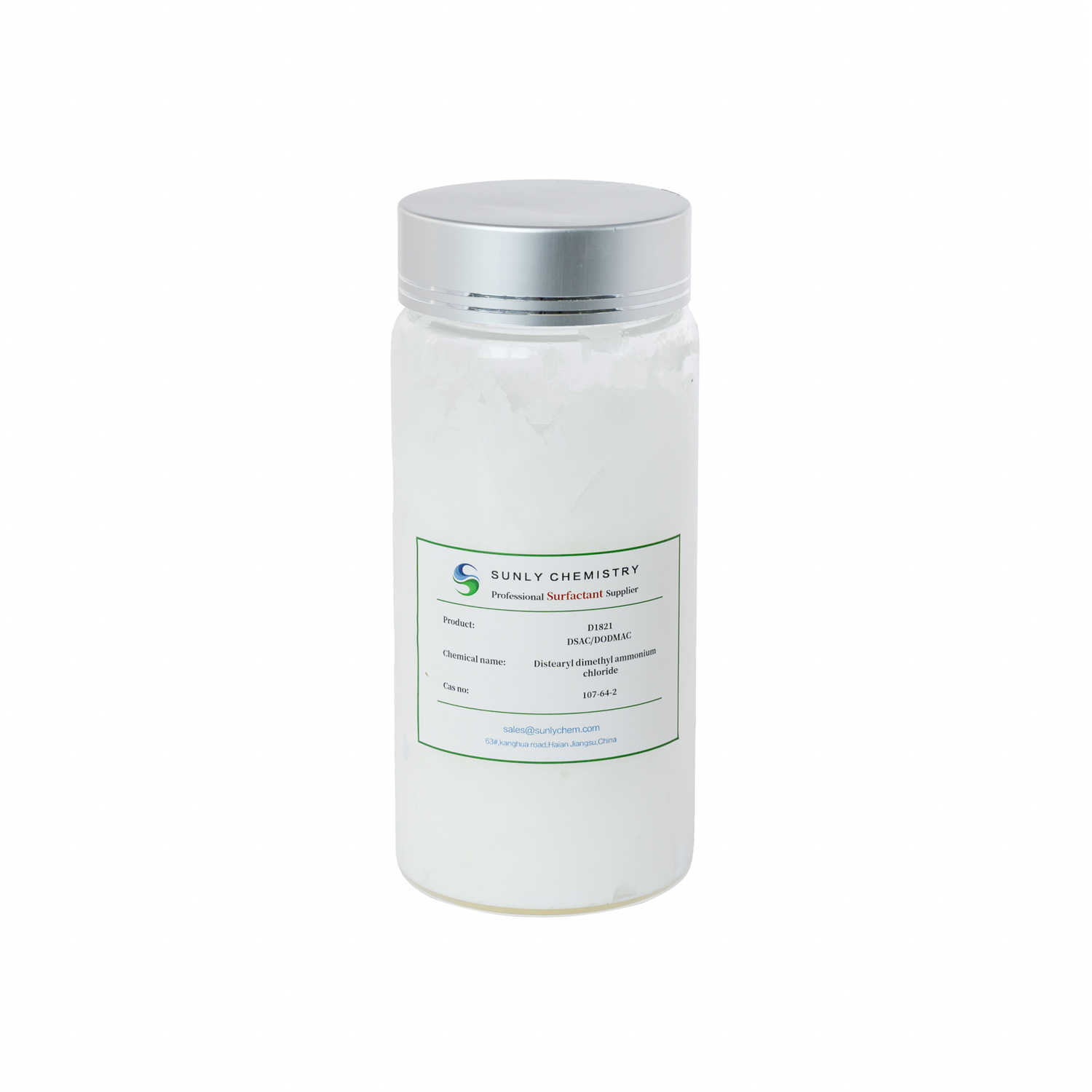
Anionic Surfactants carry a negative charge, so their antistatic action relies less on electrostatic attraction and more on wettability. They reduce surface energy and help liquids spread evenly. Once the surface wets properly, moisture forms a thin layer that allows charges to leak away instead of building up.
Their practical advantages usually show up in three ways:
● Improved spreading. Liquids flow across fibers or sheets instead of beading up. This creates a continuous path for charge dissipation. Over time, it also improves coating uniformity.
● Lower surface energy. Treated materials attract less airborne dust, which helps keep surfaces clean between processing steps.
● Process compatibility. They blend easily into detergents and wet-end formulations, so static control happens alongside washing or finishing.
A simple comparison of antistatic behavior by Surfactant type:
Surfactant Type | Main Antistatic Mechanism | Typical Materials | Relative Adsorption |
Cationic | Charge neutralization + film formation | Textiles, plastics, metals | High |
Anionic | Wettability + moisture-assisted dissipation | Paper, leather | Medium |
Nonionic | Conductivity via moisture layer | Electronics, sensitive plastics | Medium |
Zwitterionic | Dual-charge stabilization | Mixed substrates | High |
Nonionic Surfactants carry no electrical charge. That makes them valuable where ionic residues could interfere with performance, especially in electronics and precision plastics. Instead of neutralizing charge directly, they increase surface conductivity by attracting moisture and forming a uniform hydrophilic layer.
They are also known for broad compatibility. They mix well with other Surfactants, tolerate hard water, and remain stable across many formulations. For manufacturers, this means easier integration into existing processes without upsetting balance.
Key reasons teams choose nonionic Surfactants:
● No ionic contamination. This matters for circuit boards, optical parts, and cleanroom components where even trace ions can cause problems.
● Stable performance. They keep working across a wide temperature range and in acidic or alkaline systems.
● Gentle surface action. They control static while preserving appearance, transparency, and mechanical properties.
Zwitterionic Surfactants carry both positive and negative charges in the same molecule. This dual structure gives them stable antistatic behavior across changing pH conditions. They adsorb well, retain moisture effectively, and perform consistently on mixed substrates such as blended fabrics or coated plastics.
Where they stand out:
● Dual-charge adsorption. They interact with many surface types, not just one polarity. This improves coverage on complex materials.
● Enhanced humidity retention. Their structure holds water more effectively, helping maintain conductivity under dry conditions.
● Balanced performance. They reduce friction, dissipate charge, and stay stable across wide pH ranges, which supports long production runs.
In textile lines, static shows up fast. Fabrics cling. Fibers float. Dust settles back on finished rolls. Surfactants help by forming a soft conductive layer on yarns and cloth. It improves hand feel, reduces friction, and lets charges escape before they become a problem. Operators notice smoother running machines and fewer stops.
You usually see benefits across several steps:
● Spinning: fibers slide more easily, so breakage drops and tension stays stable. Over long runs, Surfactants help keep static from rebuilding between rollers.
● Weaving and knitting: reduced “static sticking” means cleaner sheds and fewer misfeeds. Fabric moves in a controlled way instead of jumping.
● Finishing: treated surfaces attract less dust. They feel softer, and coatings spread more evenly.
Common improvements reported on production floors include:
● less fabric clinging during winding
● lower lint and airborne fiber levels
● more consistent fabric appearance after finishing
Plastics generate static the moment they leave a mold or die. Parts attract particles. Films block together. Operators spend time separating sheets instead of packing products. Surfactants address this by lowering surface resistance and reducing friction at the same time.
During extrusion and molding, Surfactants support:
● Cleaner surfaces: charged parts stop pulling dust from the air. Finished items look clearer and more uniform.
● Faster release: molded parts separate from tools more easily, which shortens cycle times and improves throughput.
● Stable handling: sheets and pellets move smoothly along conveyors instead of sticking or jumping.
A simple view of how Surfactants change plastic behavior:
Production Stage | Without Surfactants | After Surfactant Treatment |
Mold release | Parts cling to tools | Faster, cleaner release |
Surface appearance | Dust pickup, haze | Clearer finish |
Material flow | Sheets stick together | Smooth separation |
In electronics, even small static charges can damage sensitive parts. Nonionic and low-residue Surfactants are often used to create a mild conductive film on housings and components. It helps charges dissipate slowly instead of discharging suddenly, protecting devices during assembly and packaging.
Typical use cases include:
● Electronics: surface treatments on casings and trays to protect electrostatic-sensitive components during transport and assembly.
● Detergents and wipes: Surfactants limit static rebound, so cleaned surfaces stay dust-free longer. They also improve wetting, which boosts cleaning efficiency.
● Personal care: shampoos, body washes, and fabric-care products use Surfactants to reduce static buildup on hair and clothing, making them feel smoother in everyday use.
Surfactants help control static by forming conductive surface layers and guiding charge away.Sunly Chemistry provides versatile surfactant solutions, offering stable performance, customization, and technical support that help manufacturers reduce defects, improve efficiency, and create cleaner, safer products.
A: Surfactants are surface agents that reduce static by improving conductivity and moisture retention.
A: Surfactants form a thin film that lets charges dissipate instead of building up.
A: Surfactants reduce friction, dust pickup, and sticking during processing.
A: Yes. Nonionic Surfactants work well where ionic residue must stay low.
A: Usually no. Surfactants lower defects and downtime, improving overall efficiency.


